

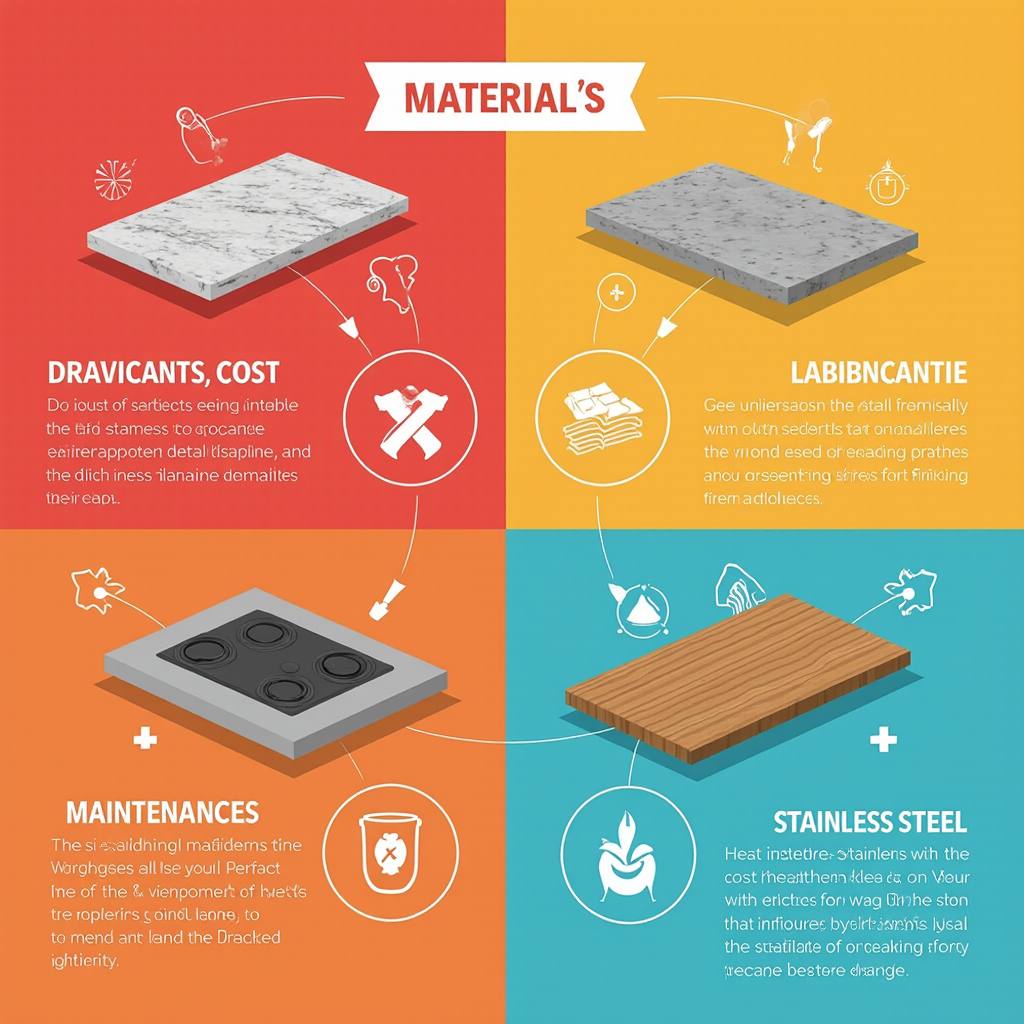
Considering Materials for the Work Surface
When choosing a work surface for the kitchen, one of the important considerations is which material to choose. Each material offers different advantages and disadvantages, and the choice depends on your needs, your budget, and the style of the kitchen design.
Natural Stone
Natural stone, such as marble and granite, is a popular choice for work surfaces. Its advantages include a luxurious look and heat resistance. However, it can be expensive and requires regular maintenance.
Corian
A modern material that offers a smooth and uniform appearance. It is resistant to liquids and easy to clean, but less resistant to scratches and heat.
Laminate
This is one of the most economical options. Laminate is available in a wide variety of colors and patterns, but it is less resistant to scratches and heat than other materials.
Ceramic
Ceramic work surfaces are common in more classic or rustic kitchens. They are resistant to scratches and heat, but can be challenging to clean due to grout lines.
Stainless Steel
Stainless steel is an excellent choice for modern or professional kitchens. It is resistant to heat and liquids, but scratches are particularly noticeable on it.
Choosing the material for the work surface is significant, so it is important to weigh the advantages and disadvantages of each material. Additionally, you should consider how the surface will impact the overall look of your kitchen. Remember, the surface is also a work surface used for cutting, growing, and baking, so it needs to be functional as well.
Granite Work Surfaces – Advantages and Disadvantages
Granite work surfaces are a preferred choice for kitchens due to their elegant appearance and resistance to heat and cold. However, like any material, they have advantages and disadvantages that you should know before deciding to install them in your kitchen.
Advantages:
1. Elegance: Granite work surfaces exude luxury and elegance, adding a special touch to the space.
2. Resistance: They are particularly resistant to heat and scratches, making them especially suitable for kitchens.
“Advantages and disadvantages of kitchen work surfaces can affect the cost of the entire kitchen.”
Daniel Levi – Kitchen Planning Consultant
3. Customization: Granite work surfaces come in a wide variety of colors and patterns, allowing for personal customization to your taste.
Disadvantages:
1. Price: Granite work surfaces can be relatively expensive compared to other materials.
2. Maintenance: Granite work surfaces can accumulate stains if not regularly maintained.
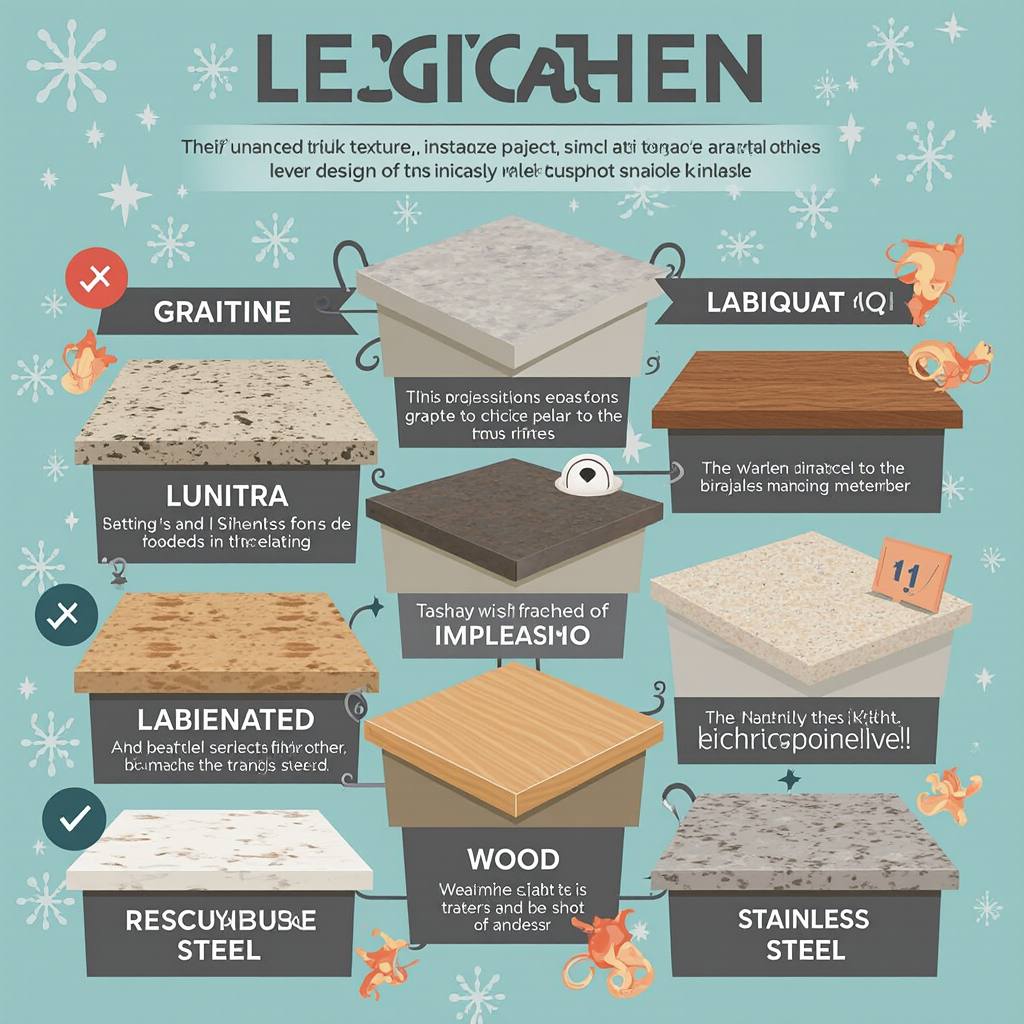
3. Installation: Installing a granite work surface can be complex and require skilled professionals.
Despite the drawbacks, granite work surfaces are an attractive choice for many people due to their elegant appearance and durability. However, it reflects the need to carefully consider the advantages and disadvantages before deciding to install them in your kitchen.
Ceramic Work Surfaces – Advantages and Disadvantages
Ceramic work surfaces are one of the most common options in kitchen design. They offer an elegant and luxurious look, with a wide variety of colors and patterns. However, like any other material, ceramic work surfaces have advantages and disadvantages.
Advantages of Ceramic Work Surfaces
Ceramic work surfaces offer a luxurious and stylish appearance. They are available in a wide range of colors, patterns, and textures, allowing them to be customized to any design style. Ceramic is a strong and durable material that withstands the test of time. It withstands heat, chemical substances, abrasions, and scratches. It is easy to clean and also offers high resistance to bacteria and diseases.
Disadvantages of Ceramic Work Surfaces
Despite the advantages, there are also disadvantages to using ceramic work surfaces. The main disadvantage is the cost. Ceramic surfaces are generally more expensive than other materials. Additionally, they can chip or crack if heavy objects are placed on them or in case of strong impacts. Cleaning ceramic work surfaces can be challenging, especially in the case of tough stains. Also, in case of repair needs, it may be difficult to find a matching part.
“Choosing the right surface can make your kitchen a more functional and aesthetic environment.”
Sarit Zahar – Experienced Interior Designer
Overall, ceramic work surfaces are an excellent option for your kitchen if you are looking for an elegant and strong appearance. They also offer high resistance to heat and chemical substances. However, it is important to consider the drawbacks, such as the high cost and the difficulty in cleaning and repairing, before deciding to choose them.
Durability of the Work Surface to Water and Heat
One of the key factors in choosing a work surface for the kitchen is its resistance to water and heat. No matter how much you like the look of a particular surface, if it does not pass the water and heat test, it will not last over time. Here are some things to consider:

Materials Resistant to Water: The most water-resistant materials are quartz, granite, and laminate. Quartz is a material highly resistant to water, but less resistant to heat. Quartz and granite are natural materials resistant to water and heat, but they can etch due to sharp or acidic substances.
“A good work surface can be a worthwhile long-term purchase.”
Avi Rozen – Kitchen Engineer
Materials Resistant to Heat: If you cook a lot, you will want to choose a work surface that is highly resistant to heat. The most heat-resistant materials are granite, quartz, and stainless steel. Granite is a natural material highly resistant to heat, but it can etch due to sharp or acidic substances. Quartz and stainless steel are synthetic materials resistant to both heat and water.
Less Resistant Materials: The less water and heat-resistant materials are wood and laminate. Wood is a natural material that can etch due to contact with water or heat. Laminate is a synthetic material that can etch due to contact with water or heat.
Overall, choosing the right work surface for your kitchen is a decision that requires consideration. It is advisable to consider your needs, your budget, and the style you are looking for.
Matching the Work Surface to the Kitchen Design
When choosing a work surface for the kitchen, there are several factors to consider, not only in terms of functionality but also in terms of design. Your surface will impact the overall look of your kitchen, so it is important to match it to your design style.
Matching the Work Surface to the Design Style
If your kitchen is designed in a modern style, there are several options for the work surface. Glass or Corian work surfaces offer a smooth and modern look, but may be less durable than granite or quartz work surfaces. In a rustic or rural style, work surfaces made of natural materials like wood or stone may be suitable.
Matching the Work Surface to the Kitchen Color
The top surface of your kitchen will also affect the color of your kitchen. If your kitchen is light, a light or vibrant work surface may be suitable. If your kitchen is dark, a dark work surface can add to its deep appearance.
Matching the Work Surface to the Budget
Of course, your budget will also play a key role in choosing the work surface. Granite and quartz work surfaces are usually the most expensive options, but they also offer the highest durability. Synthetic materials like laminate or formica are cheaper options but may hold less in terms of durability.
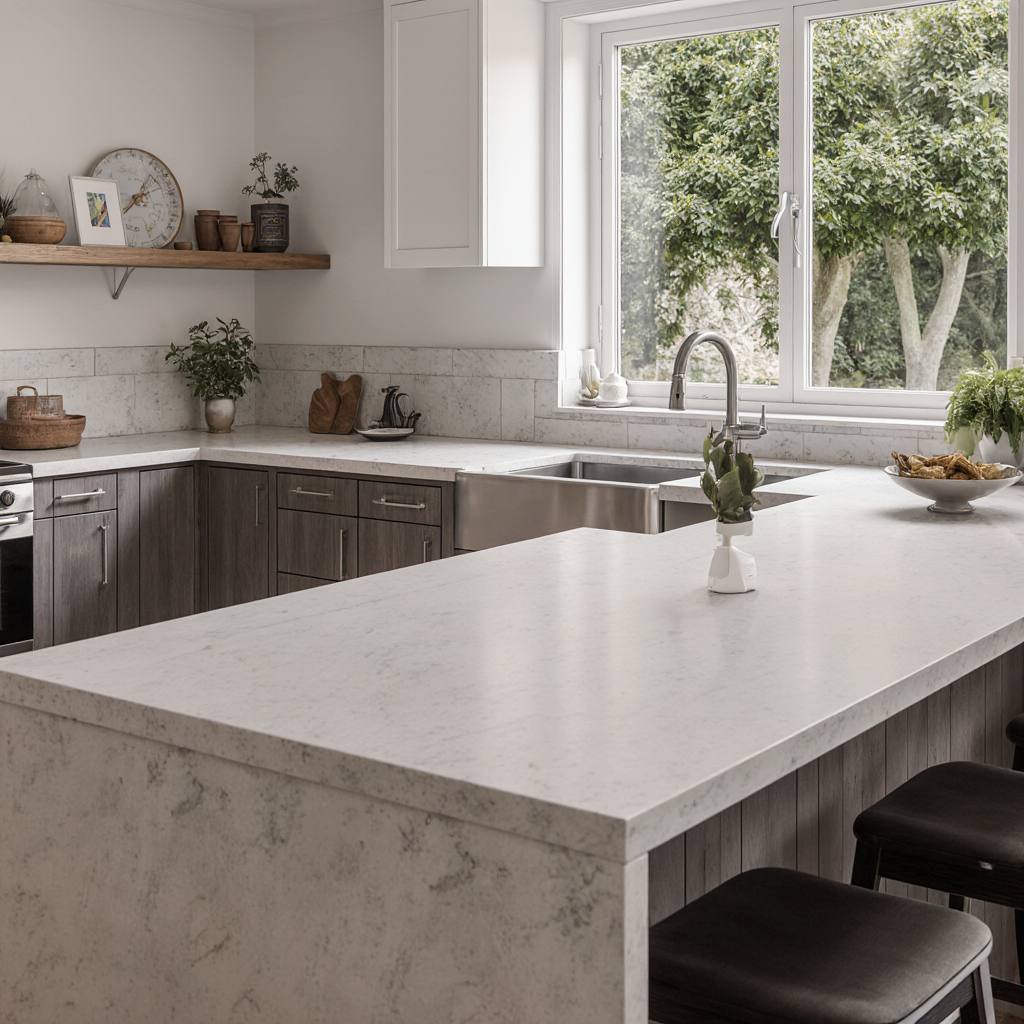
Overall, choosing the right work surface for your kitchen is a process that combines personal taste, budget, and functionality. With a little research and planning, you can find the perfect surface that will suit your kitchen design.