

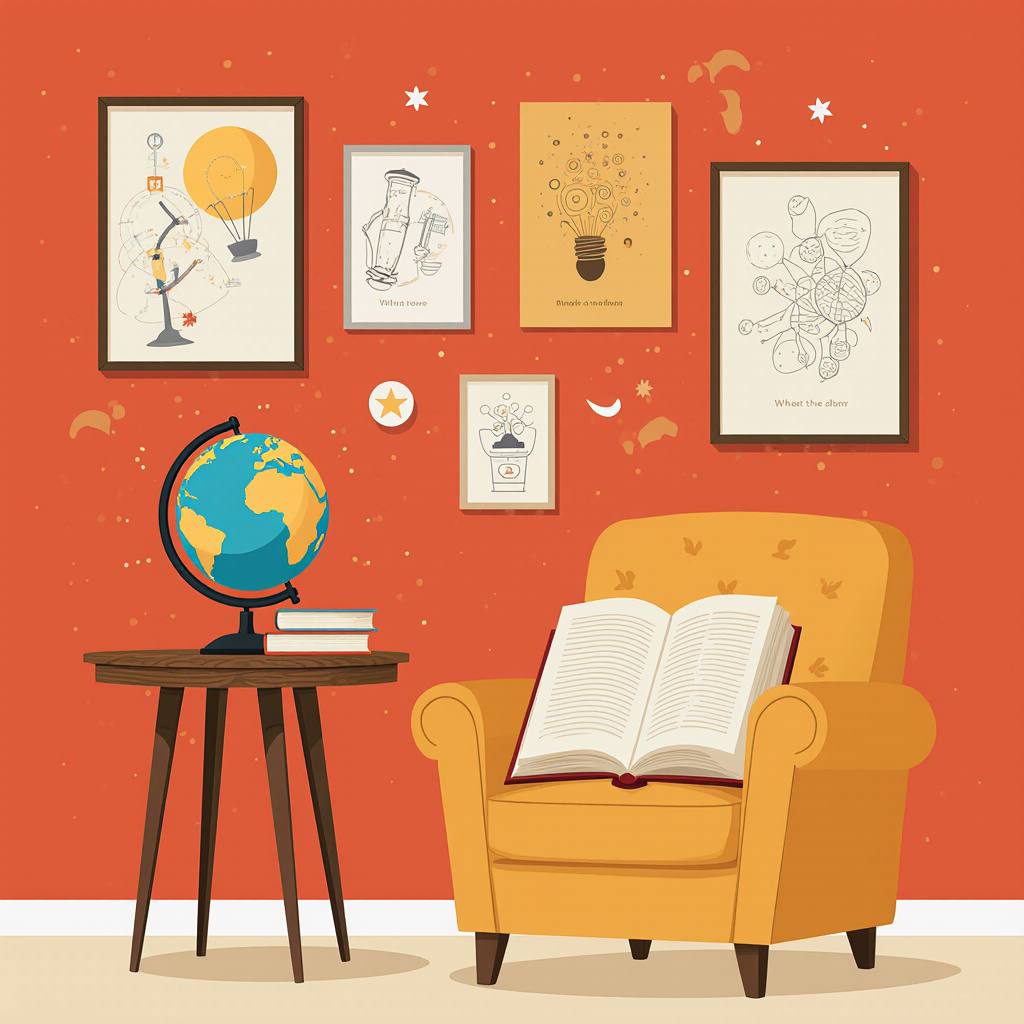
The Importance of Educational Motifs in Children’s Rooms
A child’s room is a place that reflects their inner world, hobbies, preferences, and the world they grow up in. Beyond that, the room is also a place where the child learns, plays, creates, and develops. The significance of room design goes beyond aesthetics and has educational and psychological aspects. There is great importance in integrating educational motifs in room design that can support the child’s educational journey, focus them on activities they love, and empower their experience in the room.
Educational motifs can include dinosaurs for a child who enjoys learning about the natural history of the world, world maps for a child who loves to travel, or pictures of great scientists for a child who enjoys exploring the scientific world. According to numerous studies, children whose rooms are designed with motifs that match their interests feel more comfortable in the space and feel they have a place of their own at home.
Furthermore, educational motifs in a room can add additional value in an educational aspect. A child who sees a picture of a great scientist in their room may be motivated to learn more about science, and a child who sees a world map in their room may become interested in geography and cultures of different countries.
Overall, it can be seen that there is great importance in integrating educational motifs in room design. By designing the room in a way that reflects the child’s interests and the world they are growing up in, we can provide them with a more significant educational experience and support their emotional, social, and personal development.
How to Choose Suitable Educational Motifs?
When choosing educational motifs for room design, it is important to consider various factors. Is the room intended for children or adults? What are the areas of interest of the person the room is intended for? What kind of learning environment are you trying to create? Based on the answers to these questions, you can choose the educational motifs that suit you.
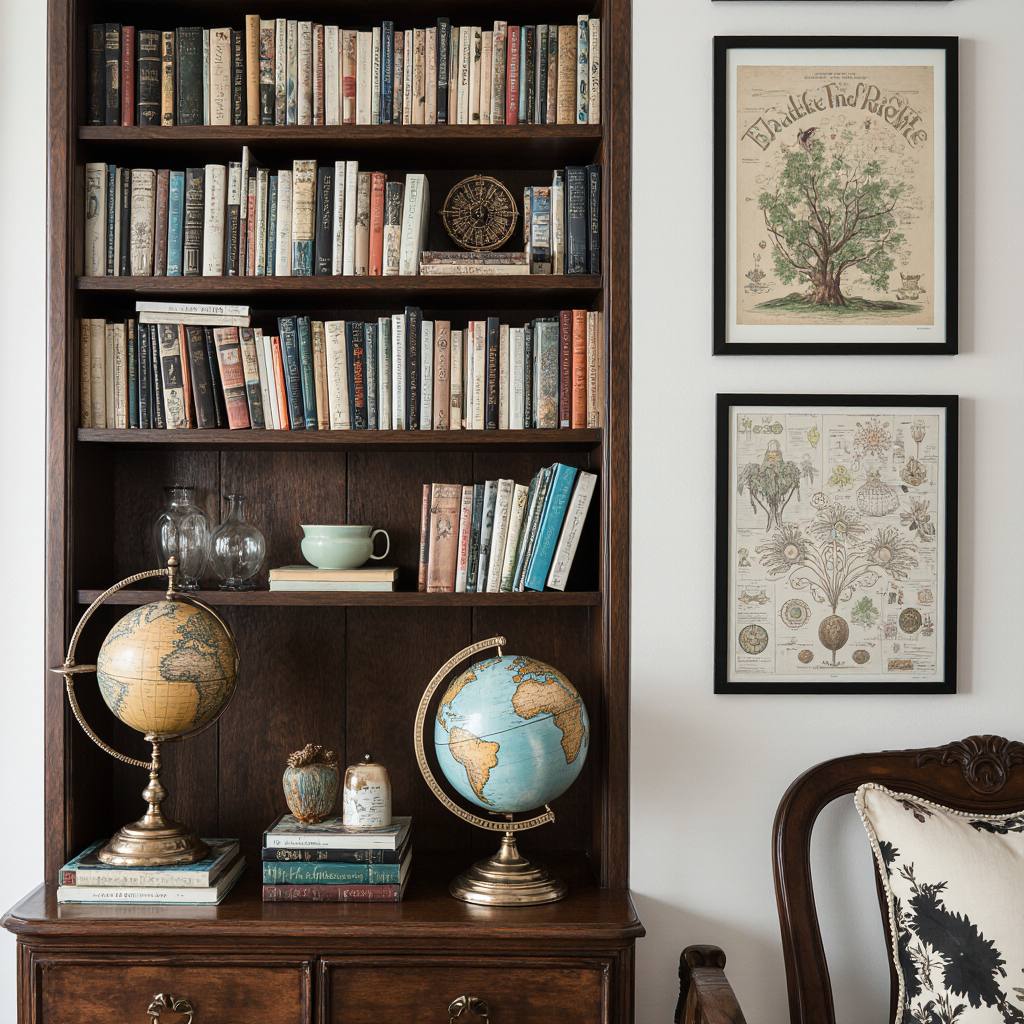
If you are designing a room for children, for example, you can choose motifs that encourage exploration and curiosity. Motifs of animals, plants, stars and galaxies, world maps, or diagrams of electrical engines can all be fascinating for children and encourage them to learn more.
On the other hand, if you are designing a room for adults, you can choose motifs that reflect their areas of interest. For example, if the person the room is intended for is interested in history, motifs of ancient maps, pictures of archaeological excavations, or paintings of famous battles may be suitable.
“In room design, we are not just designing a physical space, but also a mental and emotional space.”
Yossi Cohen – Interior Design Studio Manager
In a learning environment, educational motifs serve to encourage analytical thinking, creativity, and investigation. Suitable motifs can include books, mathematical equations, scientific diagrams, or anything that may inspire a person to learn and explore further.
Choosing educational motifs for room design is a great way to integrate learning into everyday life. With careful thought and planning, you can create an environment that encourages learning and personal development.
Integrating Educational Motifs in Room Design
In designing a living room with educational motifs, it is important to start with precise and comprehensive planning. One common technique is to incorporate various educational elements artistically in the room design. Turning an empty space into an engaging place that provides children with motivation to learn.
Educational motifs can encompass a wide range of ideas, from geographic maps, historical figures, mathematical equations, diagrams of the solar system, and many more elements that can turn the room into a place that sparks children’s interest in learning.
“Design is an art of integration: integration of shapes, colors, materials – and educational motifs.”
Ronit Barner – Artist and Interior Designer
One way to incorporate educational motifs in room design is through pictures and posters. Choosing images and posters depicting historical figures, geographical locations, or even scientific processes can turn each of them into a conversation topic and a place for interesting learning.
In addition to pictures and posters, you can use furniture with educational motifs. For example, you can choose a table with a printed world map on it, or a bookshelf shaped like a mathematical equation.
Designing a living room with educational motifs can not only be interesting and captivating but can also serve as a means to encourage children to learn and explore. It allows them to learn in an enjoyable way and feel that learning is a part of their daily lives.
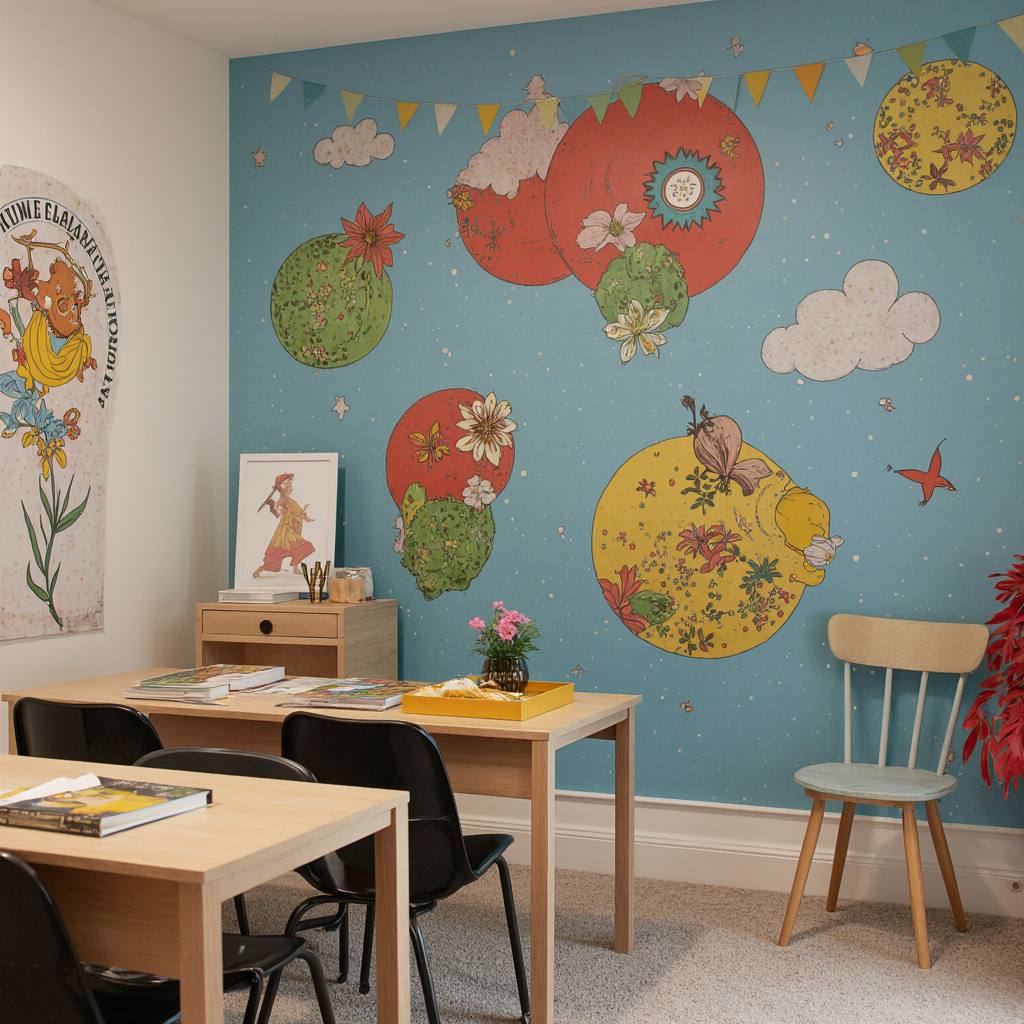
Overall, integrating educational motifs in room design is an excellent way to transform the room into an engaging and educational place. The central idea is to make learning enjoyable and meaningful, rather than forcing children to learn.
Examples of Educational Motifs in Children’s Room Design
One of the main ways to integrate educational motifs in children’s room design is through the combination of visual elements that stimulate the child’s curiosity and thinking. This can be done through the combination of bright colors, specially designed wallpapers, or furniture in the form of animals and interesting objects.
For example, you can use furniture that provides the child with a workspace for work and learning, such as a writing desk or bookshelves. You can also add educational significance to an item by incorporating elements that stimulate the child’s imagination, such as a world map on the wall or pictures of specific farm animals.
Furthermore, you can use colors that evoke feelings of relaxation and calmness, such as soft blue or pastel green. On the other hand, warm colors like red or yellow can energize children.
“The goal of design is to turn the room into a place where we want to be, to learn, to live.”
Ilana Rozen – Architect
One popular way to incorporate educational motifs in children’s room design is through the combination of educational games. Hanging board games or whiteboards on the wall allows the child to play and learn simultaneously. Additionally, there are many companies that produce specialized children’s furniture that combines play and learning naturally and effectively.
Overall, integrating educational motifs in room design can turn the child’s room into an inviting place for learning and exploration, encouraging the child to explore the world in an interesting and stimulating way.
Tips and Recommendations for Integrating Educational Motifs in Children’s Rooms
The design of children’s rooms is a process that is not only aesthetic but also educational. Integrating educational motifs in room design can turn it into a place that invites learning, creativity, and investigation. Here are some tips and recommendations that can help you in the process.
1. Learning Area: It is important to dedicate an area in the room for learning. This can be a table with chairs, a shelf with books, a writing board, or a wall for drawing. The combination of these elements can help the child get used to a learning routine.
2. Use of Colors: Using bright and warm colors can increase the desire to learn and be creative. Colors like blue, green, or yellow can inspire and improve concentration.
3. Shelves and Storage: Shelves and storage areas organize the space and allow the child to maintain order. They should be used for storing books, games, toys, and materials for creation.
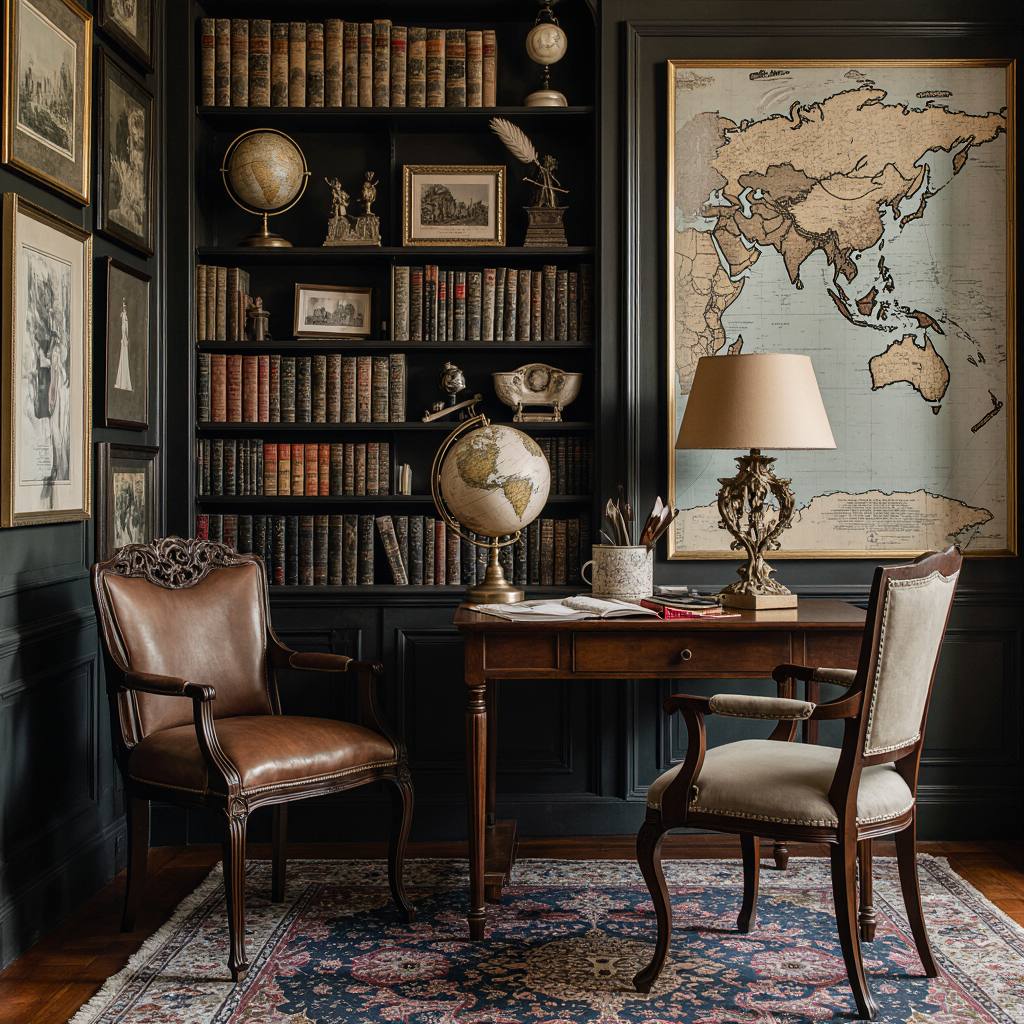
4. Integration of Educational Elements: Pictures, maps, animal or plant models, numbers, and letters – all of these are examples of educational motifs that can be integrated into room design.
5. Flexibility: Not every child likes the same things, so it is important to find ways to make the room flexible and adaptable. One way to do this is by using modular furniture or by using different colors and storage options.
In conclusion, designing a children’s room is a great opportunity to integrate educational motifs in a way that encourages the child to learn and be creative. Remember, the goal is to create an environment where the child feels comfortable, challenged, and ready to discover the world.